Gumboots in the Courtyard: Château Stays Built for a Wet French Week
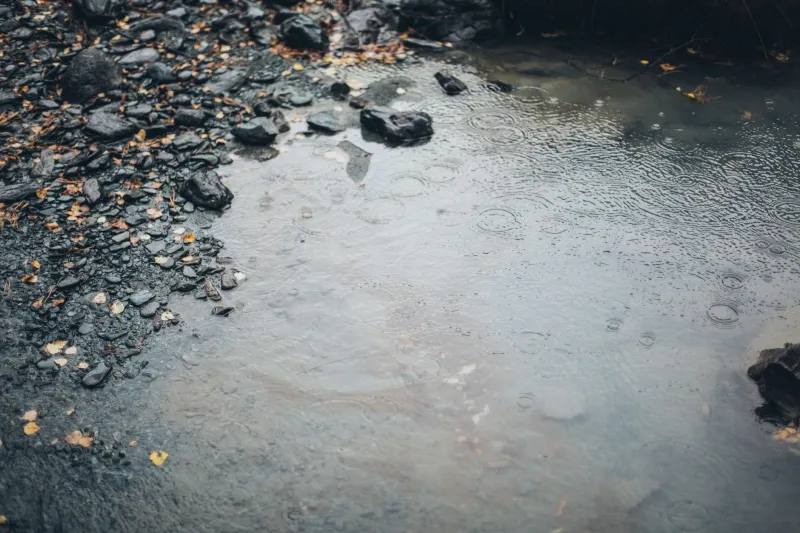
Rain in France is rarely the soft, cinematic drizzle of the brochures. In the Loire it comes in sideways; in Normandy it settles in for the afternoon; in Burgundy it turns a gravel courtyard into something closer to a pond. British travellers know this weather intimately, which is precisely why they tend to notice when a French château handles it well and when it merely hopes the sun will return.
A wet week does not have to be a lost week. But it does require a property with more than a pretty façade and a lawn. The following five château stays are chosen not for romance but for resilience: covered or indoor pools with genuine heat, drying rooms where walking boots and soaked coats can be dealt with overnight, open fires laid before arrival, and enough indoor space that four days of rain does not turn a house party into a hostage situation.
What Actually Saves a Wet Week
Before naming properties, it is worth being clear about the criteria, because the marketing language around French châteaux can be generously elastic. A “covered pool” may mean a heated pool in a converted orangery, or it may mean a solar cover over cold water in an exposed courtyard. A “drying room” may be a purpose-built boot room with a dehumidifier and hanging rails, or a spare radiator in a corridor.
The questions worth asking before booking are unglamorous: is the pool heated, and to what temperature; is the heating included in the rate or metered separately; are logs provided and is the fire laid in advance; is there a covered outdoor space, even a modest loggia, where children can be sent without full waterproofs; and how far is the nearest town with a market, a bookshop and a café that does not close between two and four.
The five properties below answer those questions satisfactorily. None is cheap, but each earns its keep when the barometer falls.
Château de la Rouvrière, Loire Valley
The Loire is the default choice for British travellers, and in wet weather it remains a sensible one, because the region’s towns — Amboise, Blois, Tours — are large enough to absorb a rainy afternoon. La Rouvrière sits in a park of mature cedars a short drive from Amboise, and its principal wet-weather asset is an indoor pool installed in a former orangery: properly heated, with a tiled surround and enough space for several families to coexist without treading on one another.
There is also a boot room by the side entrance with a dehumidifier, a heated rail and a shallow stone sink for muddy shoes, which is the sort of detail that matters more than the thread count of the sheets. The main salon has a working fireplace, and the housekeeper will lay it before arrival. The kitchen is large enough to cook properly, which is a considerable advantage when the nearest restaurant is a twenty-minute drive on wet roads.
Château de Belmesnil, Normandy
Normandy is a region that has made its peace with rain, and Belmesnil reflects that. The house is a seventeenth-century manor with thick walls, deep window seats and a library that has been stocked with actual books rather than decorative spines. Fires are lit in two reception rooms from October onwards, and the heating is included in the rate — a point worth confirming, as many Norman houses charge oil separately.
The surrounding countryside offers excellent wet-weather outings: the Bayeux Tapestry, the Caen memorial, and the cheese shops of the Pays d'Auge. There is a covered terrace overlooking the orchard where one can sit with a coat and a glass of cider and watch the rain arrive across the fields, which is a distinctly Norman pleasure. Dogs are welcome, and there is a hose and a stack of towels by the back door.
Château de Fontcouverte, Dordogne
The Dordogne is often sold as a summer destination, but it is arguably better in the shoulder months, when the caves and prehistoric sites are quiet and the rivers are full. Fontcouverte has a substantial barn converted into a games room — table tennis, a billiard table, a battered sofa — and a covered terrace that runs the length of the main façade.
Wet-weather excursions are plentiful: Lascaux IV is entirely indoors, the Gouffre de Padirac runs regardless of the forecast, and the market towns of Sarlat and Bergerac function perfectly well under an umbrella. The house has central heating throughout, which is not guaranteed in properties of this age, and a drying cupboard in the utility room.
Château de Ségurie, Burgundy
Burgundy in the rain is a serious proposition, chiefly because the region’s cellars are underground and largely indifferent to the weather. Ségurie is a small château near Beaune with a vaulted cellar where the owner conducts tastings by arrangement, and a heated indoor pool in a modern annexe that is less atmospheric than an orangery but considerably warmer.
The house is well suited to a multi-generational party: there is a ground-floor bedroom, a lift installed discreetly in the former service stair, and a large kitchen with a table that seats twelve. The Hôtel-Dieu in Beaune and the mustard shops of Dijon provide reliable rainy-day diversions. Logs are included, and the caretaker will light the fire if asked.
Château de Kergrist, Brittany
Brittany does not pretend otherwise. The rain here is frequent, the coast is dramatic, and the region’s attractions — Océanopolis in Brest, the walled town of Concarneau, the standing stones at Carnac — are largely weatherproof. Kergrist is a granite house with a walled garden, a covered pool and a wet room by the entrance that is designed for exactly the sort of return from the beach that British families know well.
The house is comfortable rather than grand, and the rates reflect that. For travellers who would rather not spend a week in a museum, it is a sensible choice.
Booking Notes for a Damp Forecast
In 2026, the most useful protection is a straightforward cancellation policy and a conversation with the owner before booking. Ask for photographs of the pool enclosure, confirmation that heating is included, and a description of the drying arrangements. A château that answers those questions promptly is usually a château that has thought about the weather. The ones that reply with lavender sachets and sunset photographs are, regrettably, the ones to approach with caution.