Early Pots and Fresh Milk: Five Château Stays That Read the British Breakfast Right
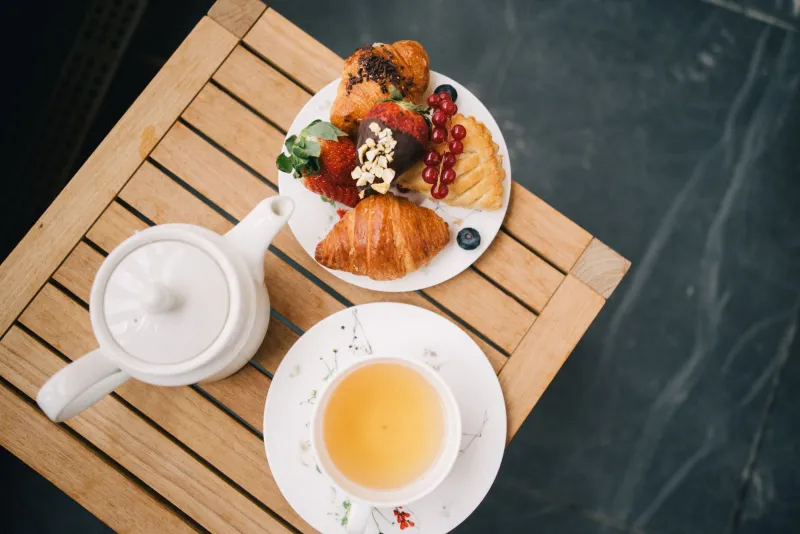
The French breakfast is one of the great civilised pleasures: coffee, bread, butter, jam, perhaps a little fruit, taken at a table that has no interest in being hurried. It is also, for many British travellers, not quite the breakfast they had in mind at 7.15 in the morning, with a ferry to catch or a long drive ahead. The difference is rarely a matter of quality. It is a matter of ritual.
As British travellers plan their 2026 breaks, the small habits of the morning are worth considering. This guide is not a plea for the full English in a French dining room, nor for châteaux to install a hotplate and a toaster. It is a practical assessment of five château stays that have understood the small British morning habits without abandoning their own character. The measure is simple: the kettle test.
What the Kettle Test Actually Measures
Four details separate a thoughtful château breakfast from a merely correct one. First, a kettle that can be used before breakfast — in the room, on the landing, or in a pantry — rather than a wait until the dining room opens. Second, fresh milk, not a UHT sachet that has travelled further than the guest. Third, a proper teapot and a tea selection that includes something stronger than a herbal infusion. Fourth, a breakfast start time that acknowledges that some guests have a 9am tunnel booking or a six-hour drive to the Dordogne.
None of this requires a château to become a Premier Inn. The best examples keep the French formality intact: linen napkins, good bread, a pot of coffee alongside the pot of tea. They simply remove the small friction that can make a British morning feel like an inconvenience.
Château de Bellevue, Loire Valley
Bellevue is the closest to the ideal. The rooms have kettles — not hidden in a cupboard, but on a tray with two cups, a small pot of tea and a note explaining that fresh milk can be collected from the pantry fridge. Breakfast begins at 7.30, which is early by French château standards, and the dining room is quiet rather than solemn. The owners have resisted the temptation to offer a cooked breakfast; instead, they have concentrated on doing the cold elements well: thick yoghurt, local honey, good butter, and a teapot that is warmed before it reaches the table.
The house itself is a restored 18th-century manor with a formal garden and a sense of order that suits the morning ritual. It is not a place for a lie-in, but it is a place where the first hour of the day works.
Château des Tilleuls, Dordogne
The Tilleuls approach is more domestic. There is no room service and no breakfast menu; instead, guests are invited to use the small pantry off the hall, where a kettle, a fridge and a tin of tea are kept. The milk comes from a farm five minutes away, left in a glass bottle with the date written on the lid in pencil. Breakfast is served at 8, but the pantry is open from 6.30, and no one minds if you take a cup back to your room.
The château is a family house rather than a hotel, and the breakfast table reflects that: a long scrubbed table, a bowl of fruit, a plate of ham, and a teapot that appears without being asked for. It is the sort of place where a British guest can make a proper cup of tea without feeling that they are asking for something unusual. That is rarer than it should be.
Château de la Roseraie, Normandy
Roseraie is the one to choose if the morning involves a ferry. The owners have timed breakfast from 6.45 for guests with early departures, and the dining room is lit and warm by 6.30. There is a kettle in the corridor pantry, a jug of fresh milk in the fridge, and a teapot already warmed on the sideboard. The breakfast itself is simple — bread, croissants, coffee, tea, and a bowl of stewed apples from the garden — but it is served with an efficiency that never tips into haste.
The château is a 19th-century house with a rose garden and a long drive, and it feels more like a country house than a hotel. The early breakfast is not advertised as a special service; it is simply the way the house works. For British travellers who have spent the night before a crossing worrying about the timetable, that is worth a great deal.
Château de Montfort, Burgundy
Montfort takes a different approach: it trusts its guests. The breakfast room is open from 7.30 to 10, and a small pantry next door is available at any hour, with a kettle, a fridge, a selection of teas and a note asking guests to help themselves. The milk is fresh, the teapot is large, and the dining room has a fire in cool weather.
This is a château for the independent traveller rather than the guest who wants to be served. The owners are present but not intrusive, and the breakfast is a buffet of good things — cheese, ham, fruit, bread, yoghurt — rather than a set menu. It is not the most formal stay in this guide, but it may be the most relaxing for anyone who likes to start the day at their own pace without feeling that they are missing a performance.
Château de Saint-Clair, Provence
Saint-Clair is the most French of the five, and it makes no apology for it. Breakfast is served at 8.30 on the terrace, with coffee, bread, fruit and a very good apricot jam. There is no early service. But there is a kettle in every room, a small jug of fresh milk delivered with the evening turndown, and a teapot available on request. The owners have understood that a British guest may want tea before the day begins, even if the day itself begins later.
The result is a compromise that works. The ritual is respected, the French schedule is preserved, and no one has to choose between the two. It is the sort of place where you can drink a quiet cup on the balcony at 7.15 and still sit down to a civilised breakfast an hour later.
The Verdict
For the earliest start, Roseraie is the clear choice. For the independent traveller who dislikes being watched over breakfast, Montfort is the most comfortable. For the best all-round balance of formality and flexibility, Bellevue leads. Tilleuls is the most homely, and Saint-Clair is the most French. None of them has turned its dining room into a motorway service station. All of them have passed the kettle test.