Three Generations, One Château: A Practical Guide to Booking a French Family House Party

Photo: BLMUtah, Public domain, via Wikimedia Commons
A multi-generational holiday is a balancing act. Grandparents may want quiet, a ground-floor bedroom and a chair in the shade. Parents want a break from cooking and a child-safe pool. Teenagers want Wi-Fi, freedom and something to do that does not involve a guided tour of a drawing room. A French château can satisfy all three, but not by accident. The difference between a memorable family house party and a week of polite friction usually lies in the booking details.
For British families, the appeal is obvious: space, privacy and a sense of occasion without the formality of a hotel. Yet a château is also a historic house, often with steep stairs, deep ponds, unfenced terraces and rules shaped by the owners. The following guide is intended to help you ask the right questions before you commit.
Start with the shape of the party
Before comparing properties, write down the real composition of the group. Ages matter, but so do mobility, sleep patterns and appetites. A toddler who wakes at six will affect the allocation of rooms. A grandparent with limited mobility may need a ground-floor bathroom rather than a charming tower suite. Two families sharing may need separate sitting areas, or at least the possibility of closing a door.
It is also worth agreeing in advance who is paying for what. A château booking often involves a substantial deposit, a damage waiver, a cleaning fee and sometimes a compulsory catering charge. British families used to self-catering cottages may be surprised by the extras. A clear budget conversation before viewing properties prevents resentment later.
Suites, bedrooms and the question of privacy
Château bedroom configurations vary enormously. Some houses offer generous suites with adjoining rooms; others have a series of independent doubles reached by different staircases. Ask for a floor plan rather than relying on photographs. Confirm bed sizes, bathroom arrangements and whether any bedrooms are accessed only through another room.
For three generations, the ideal is often a ground-floor bedroom with an accessible bathroom for the older generation, a family suite for parents with young children, and a cluster of rooms for teenagers that is close enough for supervision but not so close that everyone hears every conversation. Cots, high chairs and extra beds should be confirmed in writing. So should any supplement for single occupancy, which can catch out grandparents travelling alone.
Self-catering flexibility versus table d’hôtes
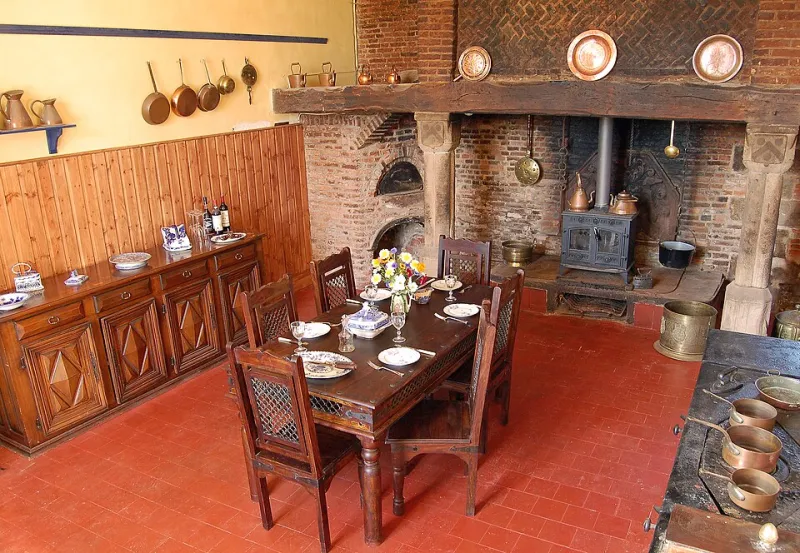
One of the first decisions is whether to take a château on a self-catering basis or to rely on table d’hôtes and breakfast. Self-catering suits families with young children, fussy eaters or a desire to keep meal times flexible. It also suits groups who enjoy shopping at local markets and cooking together. But it requires a genuinely usable kitchen, not a token kettle and two rings.
Table d’hôtes can be a pleasure: a set dinner, often with the owners, and no washing up. It can also be restrictive if children are tired or teenagers would rather eat later. Ask how many evenings dinner is served, whether children are welcome at the table, and whether allergies or preferences can be accommodated. Some châteaux offer a hybrid arrangement, with breakfast daily and dinner on selected nights. That flexibility is often the most practical choice for a mixed-age group.
Pool safety and outdoor space
A swimming pool is often the deciding factor for families, but it is also the greatest safety consideration. UK parents are used to strict pool rules; French properties may differ. Ask whether the pool is fenced, alarmed or covered. Confirm the depth, the presence of steps and whether there is a shallow end. If toddlers are in the party, an unfenced pool may be a deal-breaker, however beautiful the setting.
Beyond the pool, consider ponds, streams, terraces and staircases. A historic estate can be full of hazards that are charming to adults and dangerous to small children. Ask whether the garden is enclosed, whether there are resident animals and whether bikes or toys are provided. It is also reasonable to ask about supervision expectations and any house rules concerning children in public rooms.
Accessibility and the older generation
Accessibility is where photographs can mislead. Gravel courtyards, stone steps and narrow doorways are part of the château experience, but they are not suitable for everyone. Ask for measurements of doorways and bathroom thresholds if mobility is a concern. Confirm whether bedrooms and bathrooms are on the same floor and whether a lift is available. A ground-floor room is not necessarily step-free.
It is also worth checking the distance from parking to the entrance and whether assistance with luggage is offered. For grandparents, small details make a large difference: a firm mattress, a bathroom with a walk-in shower, and a quiet room away from the main staircase. Do not assume that a château marketed as family-friendly is also accessible.
Keeping teenagers content
Teenagers are often the hardest audience to satisfy on a heritage holiday. The answer is not to plan every hour, but to provide options. Wi-Fi should be confirmed, not assumed. Bicycles, table tennis, a games room or a tennis court can transform a stay. So can proximity to a town with cafés, markets and a bit of independence.
Parents should think about transport. Will teenagers be able to walk or cycle safely to a village? Is there a bus service? Would a second car make the week easier? A château that feels remote to adults may feel isolating to a teenager. A balance of day trips and unstructured time usually works better than a rigid itinerary.
The small print that protects the mood
Exclusive use is not always guaranteed. Some châteaux rent individual rooms while the owners or other guests remain on site. If privacy matters, confirm that the house will be yours alone. Check the policy on visitors, parties, music and noise. Some properties have a curfew or restrictions on entertaining. These rules are not unreasonable, but they should be known before booking.
Also examine the cancellation terms, security deposit and insurance requirements. Ask whether the owners live on site and how quickly they respond to problems. Confirm what is included in the cleaning fee and whether linen and towels are provided. If you are hiring a private chef or arranging a celebration, check whether the château permits outside suppliers and whether a fee applies.
Booking timeline for 2026 and beyond
For summer 2026, large family-friendly châteaux with pools and accessible bedrooms are likely to be booked well in advance. Begin enquiries at least nine to twelve months ahead for July and August, and six to nine months for late spring and early autumn. Shoulder seasons are often better value and more comfortable for grandparents, while still offering good weather for children.
A successful multi-generational château holiday is not about finding the grandest house. It is about matching the house to the family you actually have. Ask candid questions, put the important details in writing, and leave room for the unplanned afternoon by the pool. Done well, a French château gives three generations something increasingly rare: time together, with enough space to enjoy it.