Castles Without the Airport: A Rail-First Guide to Five French Château Stays
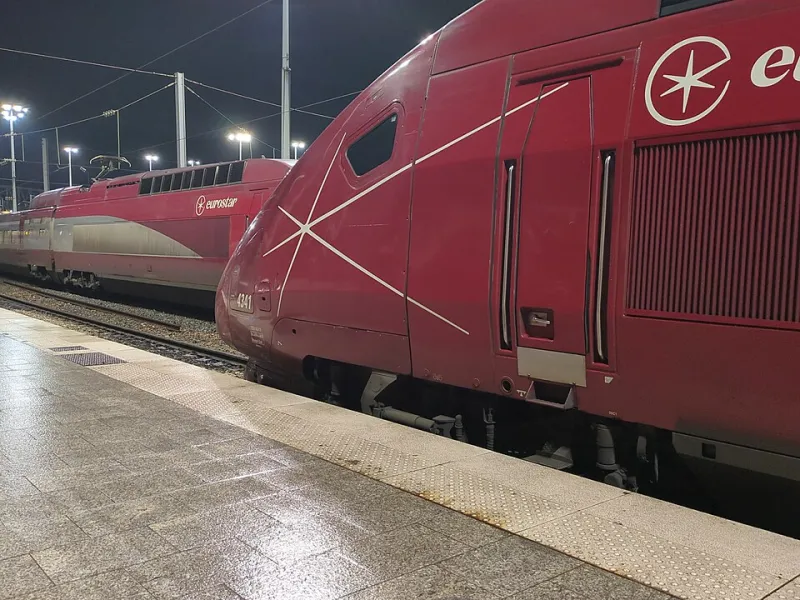
Photo: Sukkoria, CC BY-SA 4.0, via Wikimedia Commons
France has an unhelpful reputation among British travellers as a country best seen by car. The image persists: a channel ferry, a picnic hamper, a long drive south. Yet many of the most elegant château stays lie within a straightforward rail journey from London. Eurostar connects St Pancras with Paris and Lille, and from there the TGV network reaches the Loire, Burgundy, Alsace, Champagne and parts of Picardy with ease. The result is a holiday that begins with a glass of wine and a book, not a luggage carousel.
The rail-first route from London
Start with Eurostar to Paris Nord. For 2026, allow at least 75 to 90 minutes at St Pancras for check-in and security, and leave a generous connection in Paris: 60 to 90 minutes is sensible if you are changing stations, longer if you are unfamiliar with the city. Gare du Nord to Gare Montparnasse, Gare de Lyon or Gare de l'Est is a taxi or metro ride; the metro is cheaper and often quicker, but stairs are not kind to heavy cases. Book a through fare where possible and reserve TGV seats. Unlike flying, there are no liquid restrictions, but luggage space on trains is finite. A single soft-sided case that you can lift is far easier than a large hard-shell suitcase, particularly on the metro.
Five château stays for a car-free itinerary
These five houses are not an exhaustive list, but they show how varied a rail-based château holiday can be. Always confirm transfers and opening dates directly before booking.
1. Château de Pray, Loire Valley
Near Amboise, this restored house is a useful base for the Loire's greatest hits. Take Eurostar to Paris Nord, cross to Montparnasse, and continue by TGV to Saint-Pierre-des-Corps or Amboise; the final taxi takes roughly 15 to 25 minutes. Car-free days are genuinely possible here: Amboise, the Clos Lucé and Chenonceau are accessible by taxi, shuttle or a combination of train and short cab. Blois is a straightforward train ride for a day of château visiting.
2. Château de Chailly, Burgundy
Set in the Burgundian countryside near Arnay-le-Duc, Château de Chailly is a good choice for travellers who want wine, food and silence. The quickest route is Eurostar to Paris, then TGV from Gare de Lyon to Montbard, followed by a pre-booked taxi of around 30 to 40 minutes. This is the least car-free of the five: the house is remote, and a taxi is essential for evening meals unless you dine in. Use it for a house-based stay, with one day in Beaune or Dijon by taxi and train, rather than an ambitious touring programme.
3. Château d'Isenbourg, Alsace
Above Rouffach, near Colmar, this château looks across the wine route to the Vosges. Take Eurostar to Paris, then TGV to Colmar, and a taxi for the final 15 minutes or so. Colmar itself is easy on foot, and Eguisheim and the surrounding wine villages can be reached by bus or taxi. In December the Christmas markets make the region busy and expensive; in January and February it is quieter, though some wineries open by appointment only.
4. Château de Fère, Champagne
Close to Fère-en-Tardenois, this is a practical Champagne base with a romantic ruin in its grounds. The simplest rail route is Eurostar to Paris Nord, then a train from Gare de l'Est to Reims or Champagne-Ardenne TGV, followed by a taxi of around 30 to 40 minutes. Reims and Epernay are reachable by train for cellar visits, but the château itself is rural; pre-book every transfer and do not rely on hailing a cab at the station.
5. Château de Montvillargenne, Picardy
For a short break, Château de Montvillargenne near Chantilly is the easiest of the five. Take Eurostar to Paris Nord, then a local train to Chantilly-Gouvieux and a short taxi to the house. Chantilly's château, stables and forest walks are within easy reach, and the journey from London can be completed comfortably in a day. It is not the grandest château on this list, but it is one of the most sensible for a two-night escape.
Luggage, tickets and station transfers
Book train tickets as early as possible, particularly for Friday evenings and Sunday returns. SNCF Connect and Rail Europe are both useful, but a through ticket from London to your final destination can simplify disruption. If you are changing stations in Paris, allow more time than you think necessary, and travel with a compact case. Rural stations are often unstaffed, so arrange your taxi in advance, save the driver's number and tell the château your arrival time. A late-afternoon arrival in winter is not the moment to discover that the local taxi firm has stopped answering the phone.
Car-free days and a slower rhythm
The pleasure of rail travel is that it sets a different pace. You cannot dash from château to château in a day, and that is the point. Use the house as a base, take one excursion each day and return before dark. A morning market, a cellar visit, a garden walk and an early dinner will fill a day more satisfyingly than a long drive. Rail also makes the journey part of the holiday: the French countryside unfolds gradually, and the first sight of a château's towers from a taxi is all the better for having left the car behind.
None of this requires an elaborate itinerary. A Eurostar ticket, a reserved TGV seat, a pre-booked taxi and a well-chosen château are enough. For British travellers who want elegance without airport stress, the train is not merely a means of getting there. It is the beginning of the stay.